
| 8 October 2026
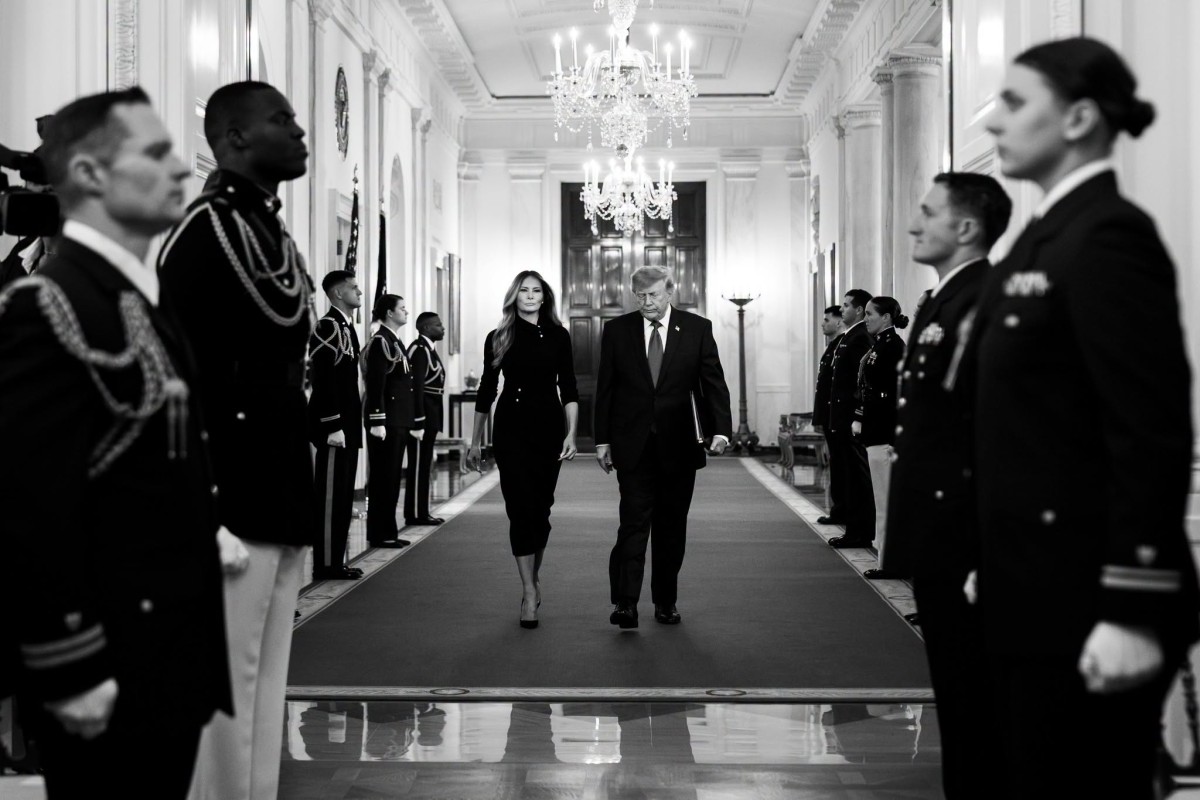
On the eighth of October, 2026, President Donald J. Trump convened the “Science: A New Golden Age” summit at the United States Institute of Peace in Washington, D.C.—a venue dedicated to diplomacy rather than discovery, yet one whose name lent an unexpected resonance to a day devoted to the power of science to shape the peace of nations.
The occasion was as ambitious as it was ceremonial. The administration unveiled more than six billion dollars in federal, industrial, and philanthropic commitments to scientific research, and the President conferred the nation’s highest scientific honours upon a distinguished assembly of modern innovators.
The Honours
The National Medal of Science was awarded to Elon Musk of SpaceX and Tesla; Sergey Brin, co-founder of Google; Jensen Huang of Nvidia; and Lisa Su of AMD.
The National Medal of Technology and Innovation was bestowed upon Satya Nadella of Microsoft and Michael Dell of Dell Technologies.
A Family Legacy Honoured
Yet the most poignant moment of the summit came in the form of a tribute video honouring the President’s late uncle, Dr. John G. Trump—a celebrated electrical engineer and physicist at the Massachusetts Institute of Technology whose contributions reshaped both medicine and national defence.
The President displayed his uncle’s original National Medal of Science, awarded for 1983 by President Ronald Reagan. The award was formally presented at the White House on 27 February 1985. Dr. Trump had died on 21 February, just six days earlier; his son, John Trump Jr., accepted the medal posthumously on his behalf—a detail confirmed by the National Science Foundation’s own record.
A Legacy of Consequence
Dr. Trump’s career was one of quiet, far-reaching influence. During the Second World War, he directed the MIT Radiation Laboratory’s European field work and helped organise radar operations for the Allied invasion of Normandy—work that proved instrumental to the success of D-Day.
Working alongside Robert Van de Graaff, he co-developed early million-volt X-ray generators, pioneering advances that revolutionised rotational radiation therapy for cancer treatment and improved techniques for wastewater disinfection.
And in a remarkable historical footnote, following the death of Nikola Tesla in 1943, the FBI enlisted Dr. Trump to examine the inventor’s personal papers and effects. He concluded—as the record confirms—that Tesla had not, in fact, developed a workable “death ray.”
The Wider Summit
The event also featured a presentation from Office of Science and Technology Policy Director Michael Kratsios, who framed the administration’s vision for overhauling federal scientific research funding. Energy Secretary Chris Wright and NASA Administrator Jared Isaacman were also expected to participate, according to coverage of the summit.
A Closing Reflection
From Dr. John Trump’s radar waves that helped win a war, to Elon Musk’s rockets that now pierce the heavens, the thread of American ingenuity remains unbroken. And today, in a grand hall in Washington, that thread was not only honoured but woven anew into the fabric of a promised new golden age.

